UPCOMING EVENTS
-
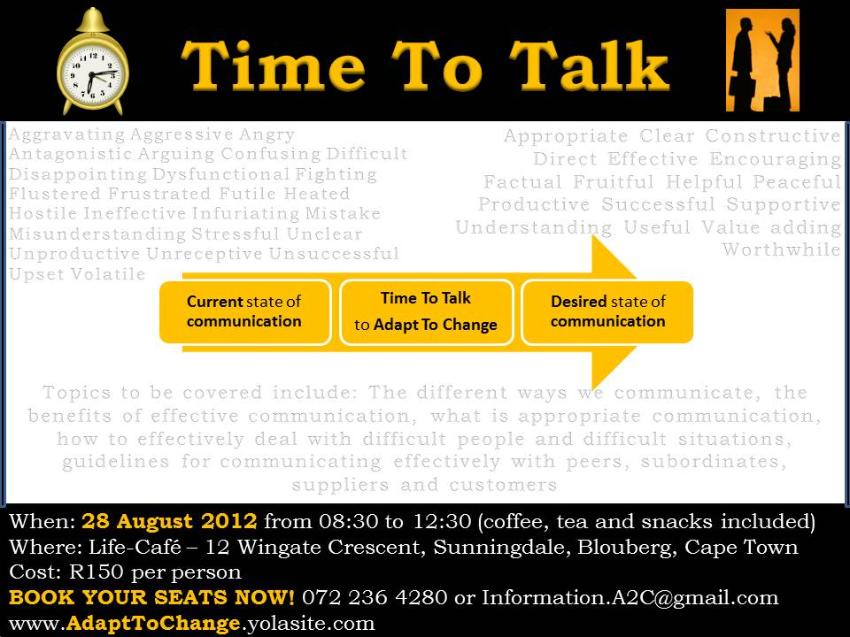
28 August 2012 - Time To Talk
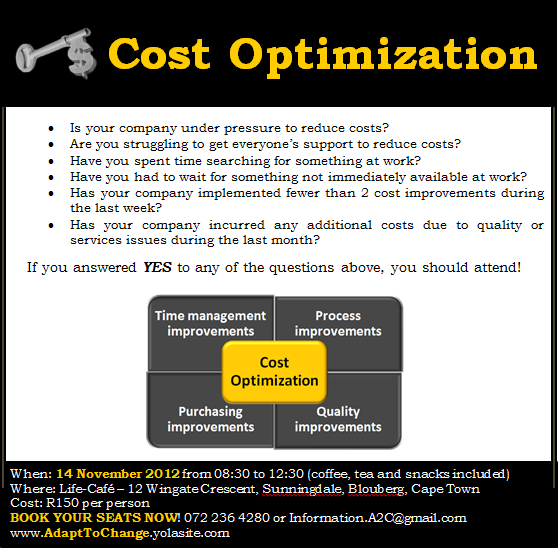
- 14 November 2012 - Cost Optimization
See adverts below for more information or Contact Us!
ADAPT TO CHANGE MORNING SEMINAR - 29 May 2012
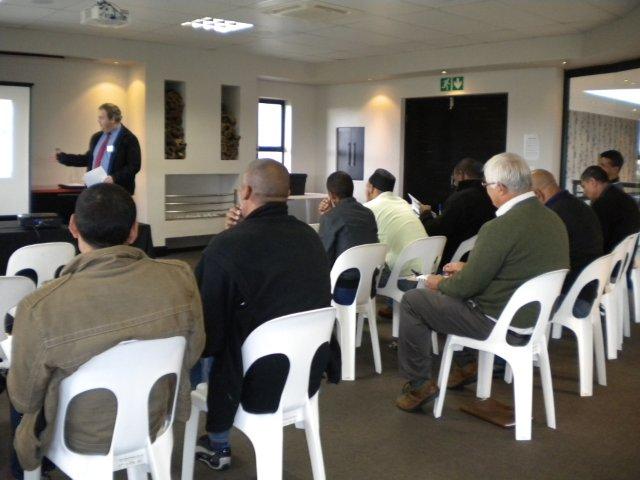
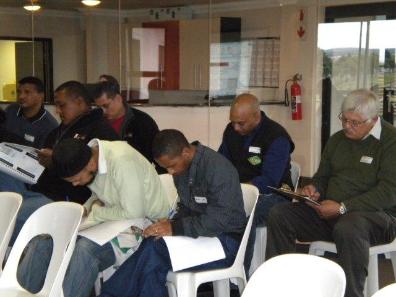
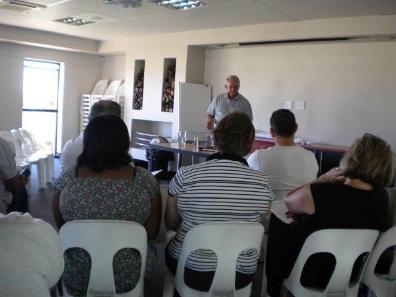
Our second event was held on 29 May 2012 at Life Cafe in Sunningdale, Blouberg. Johann Koegelenberg (Continuous Improvement and Supply Chain Consultant at Adapt To Change) presented a seminar on the topic MANAGING QUALITY FOR A PROFIT.
The following key points were highlighted:
-
Quality is defined as conformance to customers’ requirements and these requirements are normally:
-
High levels of intrinsic product quality
-
High degree of flexibility
-
High levels of service
-
Low costs
-
Short lead times
-
Little or no variability
-
Quality is relevant in every part of a business and in every activity – from products and processes to reporting, communications and information sharing
-
Participants were introduced to Crosby’s Quality Maturity Matrix and each person had the opportunity to rate their business with this tool. Although results differed from person to person and for different companies, it was clear that improvements were possible in all cases
-
TQM as a vehicle to achieve business excellence was explored in more detail. Specific emphasis was placed on the fundamentals, guiding principles and areas of caution when introducing TQM in an organisation
-
Quality improvement programs such as Crosby’s 14 point program, the Toyota Production System, the Quality Improvement Story and Six Sigma were introduced to participants
-
Quality improvement and cost reduction are compatible – this principle was explained with practical examples that indicated the impact of the cost of non-quality which can be as low as 2.5% of sales, but which is often as high as 15-20% of sales
-
Continuous improvement is:
-
A company wide process
-
Focused on achieving ongoing improvements
-
In all organizational processes and systems
-
Achieved through the elimination of waste
-
Improvements can be in the form of
-
Regular small incremental changes or
-
Major changes as a result of innovation or technology changes
-
The principles and benefits of a Gemba centered approach to quality improvement were shared with participants
-
Quality problem solving tools such as Deming’s PDCA cycle (Plan, Do, Check, Act) were introduced
-
The seminar was concluded by looking at the application of visual management, waste reduction (muda hunt) and guidelines for defining a Continuous Improvement action plan
-
The following closing thoughts were shared before ending the session with a short video clip to prove that continuous improvement is applicable everywhere, even in our kitchens:
-
Small changes
-
Small changes combined over a period result in big improvements
-
Be devoted to getting one small improvement every week without fail. In just 52 weeks from now, you will be a profoundly improved company
-
Action, speed and momentum
-
Emphasise action and speed
-
Build momentum
-
Remember interrelatedness and cross functional interaction
-
Always for with facts (quality of data)
-
Ensure that information gets to the right places
-
Consistent behaviour is key
-
When things go wrong
-
Set the example
-
Get people to focus on what went wrong and how we can fix it now
-
Also focus on how we prevent it from happening again
-
No finger pointing – it is us against the problem
-
Results and people
-
Your system should continue to allow for excellent results from ordinary people
-
Change
-
Successful organizations are constantly evolving. They change their products, services and processes – this makes managing change a vital skill
-
When quality works, we take it for granted – it is only when it fails, that we truly realise its value
 |  |
ADAPT TO CHANGE BREAKFAST EVENT - 10 March 2012
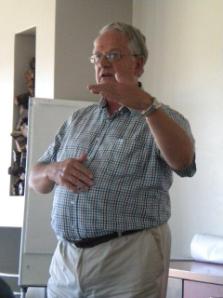
Our first event was held on 10 March 2012 at Life Cafe in Sunningdale, Blouberg. Dr Louis Naude (cognitive consultant specialising in learning and educational problems, as well as thinking skills) presented a talk on the topic ADJUSTMENT TO CHANGE: THE KEY TO SUCCESS.
The following key points were highlighted:
-
Sometimes threats, if looked at from a different angle, can become opportunities – be ready to look from the “right” angle!
-
Change is inevitable – uncertainty is the variable and this is what we should manage, rather than fighting change
-
Different people react differently when dealing with threats – some close down (convergent thinking) and some expand (change proactively) – examples were mentioned of how different businesses in the USA reacted during and shortly after the 2nd World War
-
During change the following cognitive processes can be at work: Analytical thinking and Lateral thinking
-
If you combine the above, it gives holistic thinking – this is where you want to be!
-
Remember to use a teamwork approach when it comes to thinking (e.g. during strategic planning or problem solving) – utilize different skills from different people – every person can make a contribution. In this process, use critical (negative) thinkers, analytical thinkers, lateral thinkers and holistic thinkers
-
Do not start a change process if you have not taken people on board
-
Learning is essential for on-going change, so never stop learning
 |  |